
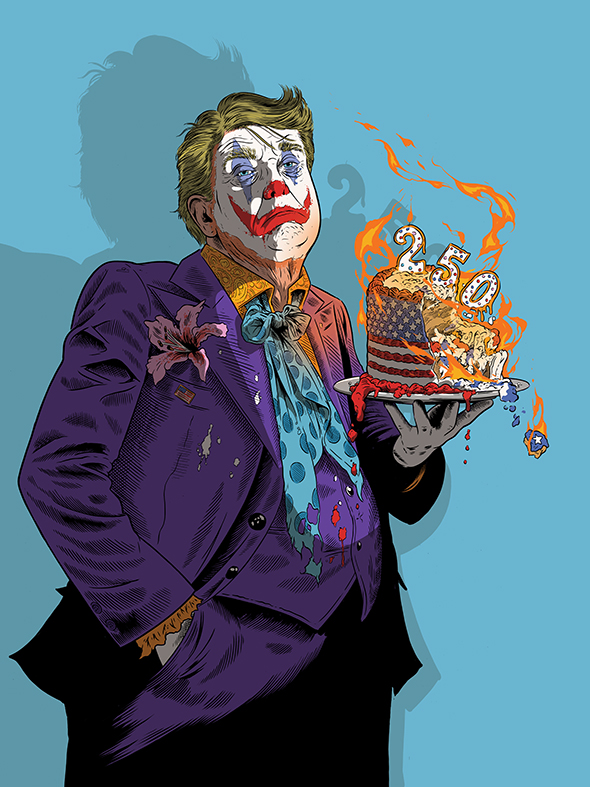
As America reaches the 250th anniversary of the Declaration of Independence by the Continental Congress on 4 July 1776, a project that was born in rationalist optimism and an inherited religious faith is foundering in delirium and absurdity. The Founders fused an Enlightenment faith in human agency with belief in a divinely ordained providence to create what they believed to be the political vehicle of a new world. Donald Trump has dispelled that hope. A nihilistic trickster is dissolving the country’s origin myth, leaving America’s future profoundly uncertain.
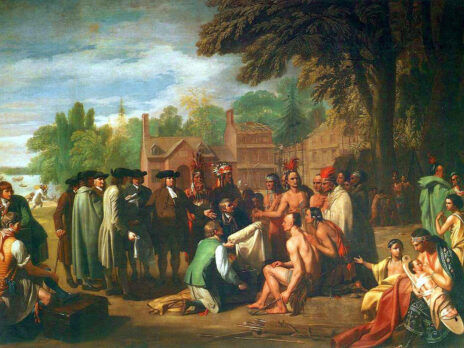
The men who gathered in Philadelphia were the opposite of utopian visionaries. Steeped in the Greek and Roman classics, they knew that history is a compendium of ruin. They accepted that republics are inherently fragile, subject to the universal gravitational pull of decay, corruption and tyranny. The long cycles of the Old World were against them. Yet they were embarked on a grandiose experiment, which aimed to elude the eternal recurrence of political tragedy. And they succeeded, though not in a manner any of them would recognise.
Almost none of the primary Framers carried this history-defying project to their grave. Far from thinking of themselves as architects of a permanent new order, they were beset by foreboding that the US constitution would pass away along with the generation that designed it. Thomas Jefferson feared the Union would fracture on the question of slavery, George Washington that factional disorder would fuel the rise of dictatorship and Alexander Hamilton that demagogues would threaten the financial system, while John Adams brooded on the decline of civic virtue. Only James Madison – after suffering acute anxiety during the War of 1812, which culminated in British forces burning down the White House and Madison fleeing for his life – died believing that strengthened federal institutions combined with constitutional checks and balances would allow the Republic to self-correct.
Today, with Europe defenceless in the absence of the American security guarantee, most commentators on this side of the Atlantic take Madison’s view. As the second Trump administration sinks into a vortex of bungled military adventurism, clownish diplomacy, economic mismanagement and Putin-style kleptocracy, they cling to the hope that Trump is a singularity, an unrepeatable aberration in a constitutional order that – albeit punctuated by a ferocious civil war – has endured longer than any other. But Trump’s America is the by-product of a precipitous collapse of trust in the country’s political classes following the era of neoliberal globalisation.

The trigger was not simply increasing economic inequality, though that rose to dizzying levels and has since expanded further with the inflation of the stock market. Offshoring industry denied tens of millions of Americans any productive role in society, while progressive legislation mounted a systematic assault on their values. What hyper-liberals denounce as culture war is the resistance of common people against the dismantling of their way of life by a pedagogic state. Abandoned as economically redundant and morally retrograde, nearly half of those who voted in the 2024 presidential election turned to Trump for shelter and revenge.
Embittered by what many of them, including sections of Maga, see as the president’s “betrayals”, few yearn for a return to pre-Trump normalcy. Driven by anger at another disastrous “war of choice”, festering suspicion of Epstein cover-ups and a worsening cost-of-living crisis, many are ready to roll the dice with another demagogue. There is no John F Kennedy or Ronald Reagan waiting in the wings. A clean sweep by candidates backed by the left-populist mayor Zohran Mamdani in New York’s recent Democratic primary for the November midterms may not be replicable across the country, but it is a symptom of an exhausted system. Trump has accomplished very little that will survive the test of time. His demolition of America’s party system looks irreversible. That is only part, however, of his world-historical role in killing America’s foundational myth.
The US is one of a handful of modern states launched as experiments in a novel kind of government along with a putatively universal creed. The outlier in Europe is revolutionary France, a powerful influence on some of the Founders. Since the overthrow of the ancien régime in 1789, the country has transitioned through at least a dozen distinct regimes, spanning five republics, two empires and various monarchical restorations and dictatorships. Any pretension to exemplifying a universal political model has long been relinquished. Even so, France retains a strong sense of nationhood. The US, on the other hand, has entered a period in which its identity as a nation is being hollowed out and emptied of content.
For all the doubts of its Founders, the US began in the faith that it embodied a break with the past. This conviction helped bind a disparate, fractious collection of colonies into a cohesive political entity. Embossed on America’s national emblem the Great Seal, used since 1782 to authenticate state documents, the motto “Novus ordo seclorum” – a new order of the ages – was a declaration of independence both from foreign powers and from history. Renewed across two and a half centuries, this sense of America’s salvific role was shared by isolationists who want to protect it from Old World corruption and evangelical liberals who aimed to spread America’s blessings to all of humankind.
The Founders’ doubts were an intellectual luxury, American exceptionalism a political necessity. Behind Trump’s midnight postings on Truth Social lauding America’s unstoppable rise under his leadership and the ugly cacophony of secretary of war Pete Hegseth’s prayer meetings in the Pentagon, there is a vacuum. With the dissolution of its unifying mythology, America’s own ancien régime faces a crisis of legitimacy, which is aggravated by the corrosive impact of progressive ideology.
Launched in August 2019 as a journalistic programme backed by the New York Times on the 400th anniversary of the first enslaved Africans’ arrival in colonial Virginia, the 1619 Project has noted (correctly) that racial servitude and the new world of freedom were born together. Moreover, the continent was not empty when it was colonised by Europeans. Westward expansion after independence was accompanied by serial conquest and, on occasion, genocide of the country’s indigenous inhabitants. America’s foundation was, in fact, its original sin.
The irony of this progressive critique, however, is that it legitimates Donald Trump’s amoral “realism”. In a widely publicized Fox News interview aired on 5 February 2017, the president was asked about his respect for Vladimir Putin, who was described as “a killer”. Trump replied: “There are a lot of killers. We’ve got a lot of killers. What do you think? Our country’s so innocent?” In a 2015 interview on Morning Joe, the host stated (correctly) that, “Putin kills journalists that don’t agree with him.” Trump responded: “Well, I think our country does plenty of killing also.”
Progressives can hardly disagree. But if the US was from the very start a state like any other, murderous and oppressive, why should anyone expect it to act differently throughout its history or in the future? The political logic of the 1619 Project is not racial justice but acceptance of the American regime’s aboriginal criminality. From this point of view, all the reforms stretching from Harry S Truman’s desegregation of the US Army in 1948 through civil rights to DEI were essentially meaningless. Hyper-liberalism and Trumpian nihilism are mirror images of one another
There is much in Trumpworld that confirms the Founders’ forebodings: rampant corruption, coarse incivility, rabid partisanship fragmenting into a chronic state of vicious political warfare. But it is doubtful whether they could have envisioned the most distinctive feature of American politics on its semiquincentennial birthday. It is not a tragic reversion to despotism and empire of the kind with which the Founders were familiar. When crime is all-pervading, the meaning and agency that persist even in the worst tyrannies is absent. In Trump’s absurdist regime, we are locked into a cycle of Groundhog Days.
Nothing is further from the truth than the progressive canard that America has returned to the prerogatives of kingship. Like a court jester who has seized control, Trump has inaugurated rule by the Joker. In ancient mythologies, the archetypal Trickster is a transgressive boundary-crosser like the Greek arch-deceiver Hermes or the Norse Loki who wreaks capricious havoc on the gods. Trump has something in him of these Trickster traits. But he also has a streak of militant madness, where he is closer to Heath Ledger’s sociopathic anarchist in Christopher Nolan’s 2008 film The Dark Knight, who memorably describes himself as “an agent of chaos”.
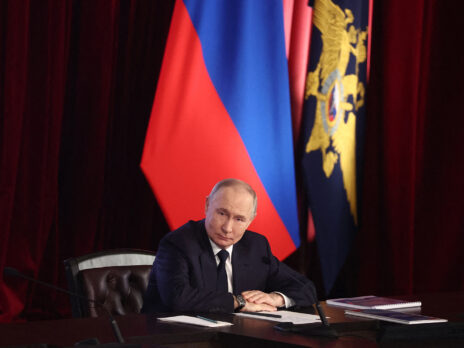
Much as he admires strongmen, Trump does not act like a typical autocrat. Putin operates much of the time in secret, and little is known of how he lives. The palaces he has built for himself are off limits. When he dispatches his enemies, their deaths are always deniable. His power is all the more fearful for being almost invisible. In contrast, though its results are atrocious, Trump’s use of power is performative. The sycophants he surrounds himself with are there to be humiliated and sacked more than to achieve any results, which would risk their outshining him. If he anoints a successor, it will not be to continue his political legacy. How could he do so, when he regards himself and his party as one and the same? Unless he aims to instal a member of his family and establish a dynasty, his instinct will be to burn the Republican house down. Aside from half-built ballrooms and algae-infested pools, he will leave nothing behind.
Describing American politics today in the terms used by the Founders is to fall into category mistakes. Trump’s America is no more an expanding empire than it is any longer a functioning republic. His military adventures are largely symbolic exercises, such as the capture and extraction of the Venezuelan president Nicolás Maduro, where the pay-off in access to the country’s oil reserves has been modest, or else exercises in imperial self-harm. By ceding Iranian control of the Strait of Hormuz, hitherto recognised as a free maritime transit route, this ludicrously misjudged and palpably lost war has turned a decaying theocracy into the region’s rising hegemon. Realising they can no longer rely on American protection, America’s Arab allies are tilting towards China, while Israel is isolated and besieged. Through its chokehold over vital commodities, Iran has become a burgeoning global power.
The neoliberal system over which Washington presided is decomposing into rival spheres of influence, with America’s shrinking by the day. Trump’s war brings the next step in deglobalisation. If maritime freedom can be ended and geography weaponised in Hormuz, the same is true of Bab-el-Mandeb connecting the Red Sea with the Gulf of Aden, the Strait of Malacca linking the Indian Ocean and the South China Sea and the Turkish straits between the Black Sea and the Mediterranean, among others.
The “rule-governed order” is being supplanted not by unfettered American imperial power but by a carnivalesque charade, in which America’s still extremely formidable military assets are being depleted and wasted to stage a media spectacle. The Memorandum of Understanding signed between the US and Iran on 17 June at a candlelit dinner in the Palace of Versailles – a droll location for those who retain traces of historical memory – was a press release, not a peace agreement. A single Iranian drone can make Hormuz impassable at any time. Oil and agricultural commodities such as urea and phosphorus are finite material resources that cannot be conjured into being in the way money is created on Wall Street. Trump’s empire is like Nolan’s Gotham City, a figment in a virtual world.
The defining feature of the Joker’s existence is its unreality, but for those trapped within the phantasm it is ineluctable. In this perpetual flux, nothing ever changes. The lipstick-smeared grimace of Nolan’s agent of chaos is the mark of a wound. He knows he cannot escape. Might the Joker-in-Chief have a similar intimation? For he too is trapped. He cannot withdraw and leave the American cost of living in the hands of Iran’s Islamic Revolutionary Guard, or escalate and be mired in another forever war. His chilling threats of annihilation are signs of desperation. However much damage another bombing campaign could inflict, overthrowing the Iranian regime requires a large-scale ground invasion, which, given American public attitudes to the war, would be politically suicidal. Perhaps only the president’s own death offers a way out.
Whatever becomes of Trump, the US will remain a prodigiously innovative great power. A crash on Wall Street or the burden of involvement in a wider war in the Middle East may dampen its vitality. With capital fleeing New York and Silicon Valley for Florida and Texas, internal Balkanisation will gather pace. Another destructive Trickster may take charge in the White House. The regime change Trump has effected is surely the first of many to come.
The Founders’ experiment has created a new dispensation; one they could not have imagined. The peculiar tyranny of America on its 250th birthday is not a tragic reversion to despotism but the seemingly unending recurrence of absurdity. In time, this too will pass. America will remain a revolutionary force, disrupting and transforming the globe with its ungovernable energy.
[Further reading: The end of the American empire]
Content from our partners



Related

This article appears in the 01 Jul 2026 issue of the New Statesman, Happy Birthday America
Join the debate
Subscribe here to commentJohn Gray’s reflections on America’s 250th anniversary offer a timely reminder that nations are sustained not only by their ideals, but by their ability to confront the gap between those ideals and their realities.
The American experiment has produced extraordinary achievements, but its history has also been marked by deep contradictions — between liberty and slavery, equality and exclusion, democratic aspirations and the pursuit of power. Gray is right to question the assumption that America’s influence and the liberal order it shaped were inevitable or permanent.
What seems particularly important is Gray’s warning against viewing history as a steady march towards progress. The current divisions in the United States are not simply the result of one politician or one election cycle, but reflect deeper questions about identity, institutions and national purpose.
The anniversary of American independence should perhaps be less a moment of self-congratulation and more an opportunity for honest reflection. A country’s strength lies not in believing it has fulfilled its ideals, but in recognising how much work remains to do.
The greatest damage Trump has done to the constitution is imbalance of the supreme court which generally votes on party lines giving Trump a 6 to 3 verdict and the lacK of accountability of the judges themselves. I imagine when originally set up they were considered wise men/women and now they (not all ) are bought men/women.
Another excellent analysis of the current politicial state of the USA. I would love John Gray to be interviewed on ‘Real Time with Bill Maher’, the HBO political talk show. Bill Maher just interviewed J.D.Vance last week. Is he a contender to be the Republican candidate for 2028? One thing is for sure both John Gray and Bill Maher share the same caustic attitude to ultra progressive ideology. Will the Democrats choose someone to represent the middle ground? It’s going to be a helluva race!